From the Jaws of Your Pliers to Your Sawblades: A No-Nonsense Breakdown of Tool Steel Alloys

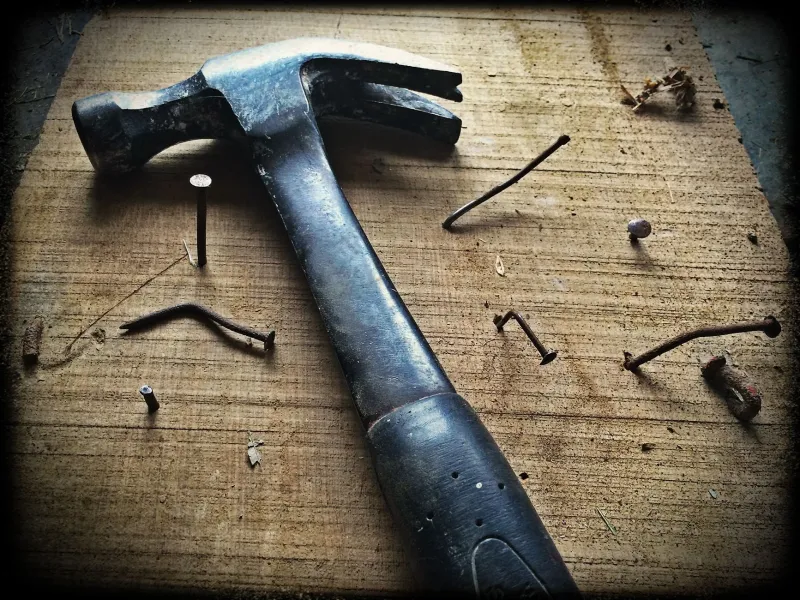
Photo by Photo by Ben Spray on Unsplash on Unsplash
Pick up two sets of lineman's pliers that look nearly identical on the shelf and put them through six months of real work. One will hold its jaw geometry, maintain grip on the cutting edge, and show nothing more than surface scuffs. The other will have developed slop in the pivot, dull cutting edges, and maybe a stress crack near the joint. The difference almost certainly isn't the design—it's what the steel is made of.
Ferrous alloys aren't one-size-fits-all, and the tool industry has developed a range of specialized steel compositions over the past century specifically because different applications demand different material properties. Understanding those alloys—even at a basic level—changes the way you evaluate tools, helps you spot counterfeit or misspecced products, and explains why some things are worth the premium price.
High-Carbon Steel: The Workhorse of Cutting Tools
High-carbon steel typically contains between 0.60% and 1.00% carbon by weight, sometimes higher for specific applications. That elevated carbon content is what allows the steel to be heat-treated to high hardness levels—essential for anything that needs to hold a sharp edge under repeated use.
You'll find high-carbon steel in chisels, hand saw blades, files, scrapers, and many striking tool heads. It's also the basis for most drill bits in the consumer and light-trade market.
The trade-off is brittleness. High-carbon steel that's been hardened is significantly less ductile than mild steel. That's manageable in a chisel or a file, but it's why you won't see high-carbon construction used in components that need to absorb shock or flex repeatedly—those applications call for something different.
What to watch for: High-carbon tools should have a consistent, fine grain structure visible at a freshly broken edge (if you ever see a fracture). Coarse, irregular grain suggests poor heat treatment or low-quality base material. A file or chisel that chips rather than wears gradually is likely over-hardened or made from steel with inconsistent carbon distribution.
Spring Steel: Built to Flex, Not Break
Spring steel is typically a medium-to-high carbon steel (often in the 0.60%–0.90% range) that's been heat-treated specifically to provide high yield strength and excellent elasticity. The goal isn't maximum hardness—it's the ability to deform under load and return to its original shape without taking a permanent set.
You'll find spring steel in snap rings, retaining clips, hand saw blade backs (the spine on a back saw), certain types of scrapers, and—obviously—mechanical springs. It also shows up in flexible rules and high-quality hacksaw blades that need to resist breakage under bending stress.
Some quality hand tool manufacturers use spring steel for pry bars and wonder bars precisely because the material can take significant bending without cracking or permanently deforming the way a lower-grade steel might.
What to watch for: A spring steel component that takes a permanent bend after one use is almost certainly not spring steel at all—it's likely mild steel that's been painted or plated to look the part. Genuine spring steel components should return to their original geometry after reasonable deflection.
Tool Steel Grades: When Precision Matters Most
Beyond the broad categories of high-carbon and spring steel, there's a formal classification system for tool steels managed by the American Iron and Steel Institute (AISI). These grades are used primarily in industrial tooling—dies, punches, milling cutters, and similar components—but understanding a few of them helps when evaluating premium hand tools and power tool accessories.
- O1 (Oil-Hardening Tool Steel): A classic general-purpose tool steel with good wear resistance. Common in woodworking plane irons and chisels from quality manufacturers.
- A2 (Air-Hardening Tool Steel): Better dimensional stability during heat treatment than O1, used in professional-grade punches and dies.
- D2 (High-Chromium Die Steel): Extremely wear-resistant due to high chromium and carbon content. Shows up in long-run stamping dies and some premium cutting tools. Not technically stainless but has partial corrosion resistance.
- M2 (High-Speed Steel, HSS): Molybdenum-based high-speed steel. The standard for drill bits, end mills, and lathe tooling that needs to hold hardness at elevated cutting temperatures.
If a tool is marketed as HSS and it dulls rapidly at normal cutting speeds, question the spec. Genuine M2 or equivalent high-speed steel should maintain its edge at cutting temperatures that would soften lesser steels.
Stainless Steel: Corrosion Resistance Comes at a Cost
Stainless steel tools have become more common as the market has expanded, and the marketing around "stainless" can be misleading. There are dozens of stainless alloys, and not all of them are well-suited for tool applications.
The most common stainless grades in tools are:
- 420 Stainless: Heat-treatable martensitic stainless. Used in knife blades, surgical instruments, and some hand tools. Decent corrosion resistance, moderate hardness potential.
- 440C Stainless: Higher carbon content than 420, capable of reaching higher hardness levels. A premium knife and blade steel.
- 304 Stainless: The ubiquitous kitchen and hardware stainless. Excellent corrosion resistance but not heat-treatable to useful hardness for cutting applications. You'll see this in tool handles, storage, and non-cutting components.
The problem in the import market is that some tools marketed as stainless cutting tools are made from 304 or similar austenitic grades that simply cannot be hardened effectively. They look like stainless tool steel but perform like soft metal.
What to watch for: A stainless knife or chisel that won't hold an edge despite proper sharpening technique is likely made from a non-hardenable stainless grade. Compare the hardness spec (Rockwell C scale, or HRC) on the product listing—a properly hardened cutting tool should be in the 55–65 HRC range depending on application.
Spotting Misspecced or Counterfeit Tools
Here's a practical checklist if you suspect a tool isn't what it claims to be:
- Check for a hardness rating in the specs. Reputable tool manufacturers publish HRC values. No hardness spec is a yellow flag.
- Test edge retention. A drill bit, chisel, or blade that dulls after minimal use on appropriate material is underperforming for its stated grade.
- Look at the fracture face if a tool breaks. Coarse grain = poor steel or bad heat treatment. Fine, consistent grain = quality.
- Magnet test for stainless type. Martensitic stainless (420, 440C) is magnetic. Austenitic stainless (304, 316) is not. If a supposedly hardened stainless cutting tool is non-magnetic, it's the wrong alloy.
- Research the manufacturer. Established brands—American, German, Japanese—publish material specs and back their tools with warranties. Anonymous import brands often can't or won't.
You don't need a metallurgy degree to buy good tools. But knowing what the material is supposed to do—and recognizing when it's not doing it—puts you in a much stronger position as a buyer and keeps your shop stocked with tools that actually earn their shelf space.