SAE vs. Metric in 2025: The Toolbox Argument American Tradespeople Are Still Having
Ask any working mechanic, ironworker, or general contractor about their metric versus standard situation and you'll get one of two answers: a resigned sigh, or a very strong opinion delivered at volume. Sometimes both.
The US has been in an awkward measurement limbo for over fifty years. We came close to full metrication in the 1970s, then backed off. The result is a working environment where your truck's engine might have metric fasteners but the trailer hitch it's pulling uses SAE. Your imported welding equipment has metric fittings and your American-made steel tube is measured in fractions of an inch.
For tradespeople trying to build an efficient, non-redundant tool kit, this is genuinely annoying. So let's break it down practically — no nationalism, no nostalgia, just what you actually need in your toolbox in 2025.
How We Got Here (The Short Version)
The Metric Conversion Act of 1975 made metrication voluntary in the US. Voluntary. That one word explains everything. Manufacturing industries that were already deeply invested in inch-based tooling, hardware, and machine specs largely stayed put. The construction trades, structural steel fabrication, and residential work remained firmly in SAE territory.
Meanwhile, the auto industry started shifting toward metric in the late 1970s as foreign manufacturers entered the American market and domestic automakers began global platform sharing. Electronics, scientific industries, and pharmaceutical manufacturing went fully metric. The military standardized on metric for most applications.
The result isn't really a battle between two systems anymore. It's a patchwork. And that patchwork defines what's actually in your toolbox.
Which Trades Are Essentially Metric Now
If you work in any of these fields, metric isn't optional — it's the job:
Automotive and diesel mechanics work almost exclusively metric on anything manufactured after the mid-1980s. Domestic brands like Ford and GM shifted their engine and drivetrain fasteners to metric decades ago. The handful of SAE fasteners you still encounter on older American iron or trailer hardware are the exception, not the rule.
HVAC and refrigeration increasingly spec metric components, particularly on commercial equipment and anything with European or Asian-origin components. Refrigerant line fittings, electronic controls, and variable-speed drives all trend metric.
Precision machining and CNC work lives in a bilingual world, but metric is dominant in any shop running imported tooling or cutting to ISO tolerances for export parts. If your shop programs in millimeters, your measuring tools need to match.
Electrical and low-voltage installation work largely follows metric conduit sizing and hardware in commercial applications, driven by NEC alignment with international standards.
Where SAE Still Runs the Show
Don't throw out your standard wrenches yet. These areas remain firmly inch-based in the US:
Structural steel and ironwork — ASTM standards, AISC specs, and standard bolt grades in the US structural world are all inch-based. Your structural bolts are 3/4-inch or 7/8-inch, not M19 or M22. If you're doing ironwork, steel erection, or heavy fabrication to US building codes, you're working in fractions.
Residential and light commercial construction — lumber dimensions, drywall, pipe fittings, and standard hardware are inch-based. Period. This isn't changing anytime soon.
Agricultural equipment — older American-made farm machinery is deeply SAE, though newer equipment from global manufacturers has gone increasingly metric. If you're servicing a John Deere tractor from the 1990s, you'll need both.
Plumbing — pipe sizing in the US uses nominal inch designations that don't directly correspond to actual dimensions in either system. It's its own special chaos, but thread standards and fittings are SAE-derived.
The Honest Case for Owning Both
Here's the thing most toolbox arguments miss: for most working tradespeople in the US, owning both metric and SAE isn't redundancy — it's just reality. The question isn't whether to own both. It's which categories matter enough to buy quality in both, and where you can get away with a cheaper solution.
Where you need quality in both systems:
-
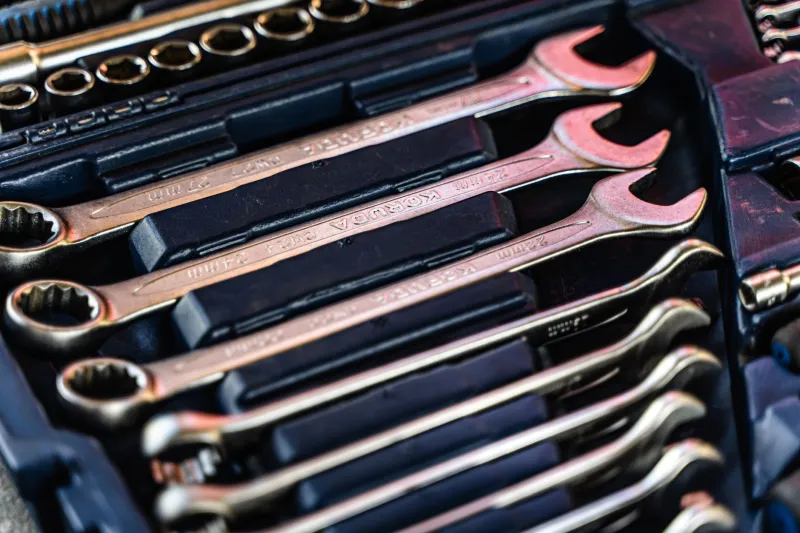
Combination wrenches and sockets — If you turn wrenches professionally, buy quality sets in both. Rounding fasteners with undersized or poorly-made tools costs more in rework and frustration than the price difference between a decent set and a great one. This is not the category to economize.
-
Hex keys (Allen wrenches) — Metric and SAE hex sizes are close enough to be dangerous. Using a 5/32" key on an M4 bolt (or vice versa) will round out the socket. Keep separate, labeled sets and don't mix them in the same holder.
-
Torque wrenches — Most quality torque wrenches read both ft-lb and Nm, so you don't actually need two. But make sure yours does before you buy.
Where one good set covers you:
-
Adjustable wrenches and pliers — These are system-agnostic. A good set of channel-lock pliers doesn't care whether the nut is metric or SAE.
-
Screwdrivers — Bit drivers work across both systems. Phillips is Phillips, flathead is flathead.
-
Hammers, chisels, punches — No measurement system involved. Buy good steel and move on.
The Smart Buy Strategy for 2025
If you're building or upgrading a kit this year, here's a practical framework:
Identify your primary trade first. If 80% of your work is structural steel and US construction, invest in a premium SAE socket set and a budget metric set for the occasional import fastener. If you're a fleet mechanic, reverse that priority.
Don't buy combo sets as your primary tools. Those 100-piece combination metric/SAE socket sets look like value. They're often not. The individual sizes are frequently low-quality, and you end up with duplicates of sizes you never use and gaps in the ones you do.
Invest in measuring tools that handle both. A quality digital caliper that reads both inches and millimeters is one of the best $30 to $60 investments in any shop. Same goes for combination squares with dual-scale rules.
Label and organize by system. Sounds simple. Almost nobody does it consistently. Keeping your metric and SAE sockets in clearly separated trays eliminates the grab-and-check-and-grab-again cycle that wastes time on every job.
The Takeaway
The metric versus SAE debate in the US isn't going to resolve itself anytime soon. The trades are too fragmented, the infrastructure too entrenched in both systems. What you can control is how intelligently you invest in your kit.
Know your trade. Know your fasteners. Buy quality where it counts, and stop pretending you can get away with one system when your work demands two. At FerStore, we carry tools built for the real world — which, in the US, means both.