Iron Discipline: How Serious Tradespeople Keep Rust Off Their Steel Tools for Good
You've seen it happen. A solid set of wrenches left in the back of a truck bed over a wet weekend, and by Monday morning they look like they've been sitting at the bottom of a lake for a decade. Rust doesn't care how much you paid for your tools or how careful you usually are. It's chemistry — and chemistry doesn't take days off.
The good news? Rust is almost entirely preventable if you understand what you're dealing with and pick the right protection strategy for your work environment. Let's dig in.
Why Steel Rusts in the First Place
Iron and steel rust through a process called oxidation. When iron atoms in your steel tool come into contact with oxygen and moisture, they form iron oxide — what we commonly call rust. The reaction accelerates in the presence of salt, acids, or high humidity, which is why tools used near coastal job sites or in chemical-heavy environments deteriorate faster than those kept in a climate-controlled shop.
Here's what a lot of folks miss: rust isn't just surface-level ugliness. Left unchecked, it creates microscopic pits in the metal that weaken structural integrity over time. A slightly rusty pipe wrench is cosmetically rough. A heavily rusted load-bearing bracket is a safety hazard.
Galvanization: The Heavy-Duty Shield
Galvanization is the process of coating steel with a layer of zinc. The zinc acts as a sacrificial barrier — it corrodes before the underlying steel does, buying your tool or hardware years of extra life. Hot-dip galvanization, where parts are submerged in molten zinc, is the most durable version and is commonly used on structural hardware, fasteners, and outdoor equipment.
Best for: Outdoor applications, structural components, fasteners, anything that sees consistent moisture exposure.
Cost reality: Galvanized hardware typically runs 15–30% more upfront than uncoated equivalents. But when you factor in replacement frequency, that premium pays for itself fast — especially on items like anchor bolts, brackets, and chain hardware.
Limitation: Galvanized parts can be harder to weld, and the zinc coating can off-gas toxic fumes if cut or welded without proper ventilation. Not ideal for every application.
Powder Coating: Tough Finish, Real-World Performance
Powder coating involves applying a dry powder electrostatically, then curing it under heat to form a hard, protective shell. You'll find it on everything from tool storage systems to heavy equipment frames. It looks clean, resists chipping better than standard paint, and provides a decent moisture barrier.
Best for: Shop equipment, tool carts, frames, and anything that needs to look professional while taking daily abuse.
Cost reality: Powder coating a single item professionally can run $50–$200 depending on size. For tools you're buying new, it's baked into the price. For refurbishing older gear, it's worth a cost comparison against replacement.
Limitation: Once the coating chips or cracks — and it will eventually — moisture can sneak underneath and cause rust that's actually harder to spot. Regular inspection matters.
Oil Treatments: The Tradesperson's Everyday Tool
For hand tools, oil is your first line of defense and your cheapest one. A light wipe-down with a quality tool oil — WD-40 for displacement and light protection, 3-in-1 oil for general maintenance, or dedicated tool oils like Boeshield T-9 for longer-lasting film — keeps moisture off metal surfaces and prevents oxidation from getting started.
Best for: Hand tools, cutting edges, drill bits, saw blades, and any tool that gets handled frequently.
Cost reality: A can of quality tool oil costs a few bucks and lasts months. This is the most cost-effective rust prevention method available, full stop.
Limitation: It's not a set-it-and-forget-it solution. Oil evaporates, wears off, and needs to be reapplied — especially in humid or high-use environments. It's maintenance, not a permanent fix.
Stainless Steel: When You're Done Fighting the Battle
Stainless steel contains chromium, which forms a passive oxide layer on the surface that actually protects itself. It's not immune to corrosion — especially in chloride-heavy environments like marine settings — but it's dramatically more resistant than carbon steel.
Best for: Food service environments, marine applications, medical or pharmaceutical settings, and any situation where rust contamination is a safety or compliance issue.
Cost reality: Stainless tools and hardware can cost 2–4x their carbon steel equivalents. For most general trade work, that premium isn't justified. But if your job site demands it, it's cheaper than the liability.
Limitation: Stainless is typically softer than hardened carbon steel. For applications where hardness and edge retention matter — cutting tools, impact sockets — stainless often isn't the right call.
Building a Maintenance Routine That Actually Sticks
Knowing your options is half the battle. The other half is consistency. Here's a simple framework that works for most tradespeople:
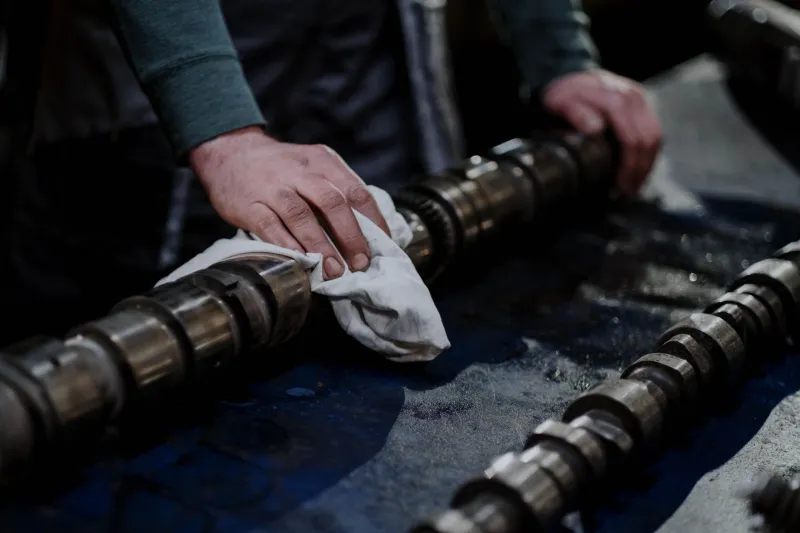
After every use: Wipe down metal surfaces to remove moisture, grime, and debris. Takes 30 seconds. Saves hours of rust removal later.
Weekly: Apply a light coat of tool oil to hand tools, blades, and any exposed metal surfaces stored in humid environments.
Monthly: Inspect powder-coated and painted surfaces for chips or cracks. Touch up immediately. Check galvanized hardware for white rust (zinc corrosion) — it's normal but worth monitoring.
Annually: Do a full tool audit. Anything showing deep pitting or structural rust needs to be evaluated for replacement. Surface rust that hasn't penetrated deep can often be treated with a rust converter and re-oiled.
Matching Your Strategy to Your Environment
There's no one-size-fits-all approach here. A concrete contractor working in the Pacific Northwest has different needs than an HVAC tech in Phoenix. Humidity, salt exposure, chemical contact, and storage conditions all factor into which protection method makes the most sense.
If you're working outdoors in a wet climate: prioritize galvanized hardware and stainless fasteners where the budget allows.
If you're running a shop in a dry region: regular oiling and powder-coated storage solutions will serve you well for years.
If you're in a coastal or marine environment: stainless is worth the investment on anything that lives outside.
The bottom line is this — rust is predictable, and predictable problems have solutions. A little upfront investment in the right protection strategy, combined with a consistent maintenance habit, is what separates tradespeople who are always buying new tools from the ones who are still running the same gear they bought fifteen years ago.