Hand-Forged and Proud of It: What Blacksmith-Grade Tools Actually Deliver for Working Tradespeople
Spend any time on woodworking forums, blacksmithing communities, or serious tradesperson groups online and you'll notice something: hand-forged tools have gone from niche collector items to a legitimate market segment with real money flowing through it. A single hand-forged mortise chisel from a respected American maker can run $80 to $150. A custom forged hammer from a small-batch smith might cost $200 to $400. A set of hand-forged timber framing chisels? You could be looking at $600 or more.
The question worth asking — especially if you're a working professional rather than a weekend hobbyist — is whether that premium represents real engineering value or whether you're essentially buying a beautiful object that happens to be a tool.
The answer is more nuanced than either the enthusiasts or the skeptics want to admit.
What Forging Actually Does to Iron and Steel
To evaluate the premium honestly, you need to understand what the forging process does to metal at a microstructural level — because this is where the genuine performance argument lives.
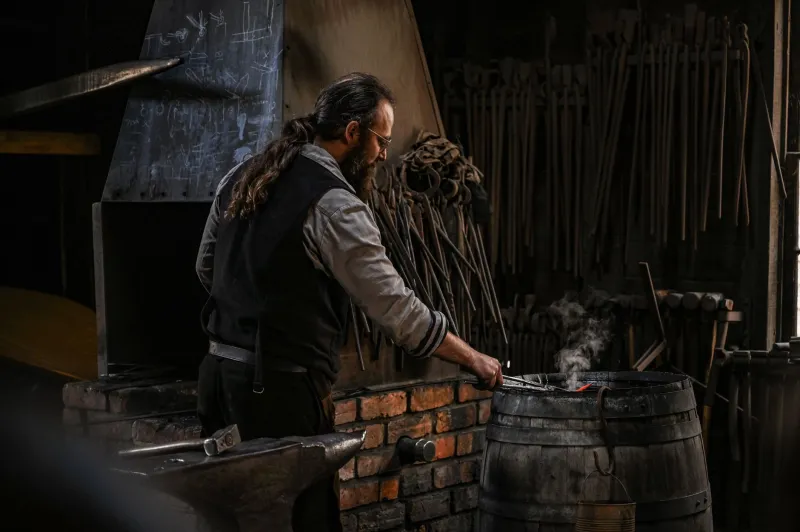
When a blacksmith heats a bar of high-carbon steel to working temperature (typically 1,900 to 2,300°F for tool steels) and shapes it under a hammer, a few things happen that don't occur in cast or stock-removal manufacturing:
Grain refinement. The repeated hammer blows break up the coarse grain structure that forms during the initial steel casting process. Finer grain structure generally means better toughness — the steel can absorb impact without cracking. This matters enormously for striking tools like hammers and chisels that take repeated shock loads.
Grain flow alignment. In a forged tool, the grain structure of the steel follows the shape of the tool — flowing around curves and through cross-sections in a way that reinforces the geometry. A machined tool cut from bar stock has grain running in one direction regardless of the tool's shape. Think of it like the difference between cutting a curved handle from straight-grained wood versus steam-bending it to shape.
Work hardening at the surface. The hammering process introduces compressive stress at the tool's surface, which can improve resistance to wear and fatigue cracking. This is particularly relevant for tools that flex slightly under load, like pry bars or certain chisels.
These are real metallurgical benefits. They're not marketing language. Whether they translate to noticeable real-world performance depends heavily on what you're doing with the tool.
Where the Performance Difference Is Real
Talk to contemporary craft toolmakers — smiths like those at North American shops producing small-batch trade tools — and they'll consistently point to the same applications where forging delivers measurable advantages over mass-produced alternatives.
Striking chisels and punches are the clearest case. A hand-forged socket chisel made from properly heat-treated high-carbon steel will hold an edge longer between sharpenings and resist mushrooming at the struck end better than a comparable cast or machined chisel. Timber framers and furniture makers who use their chisels hard every day report meaningful differences in edge retention — not marginal ones.
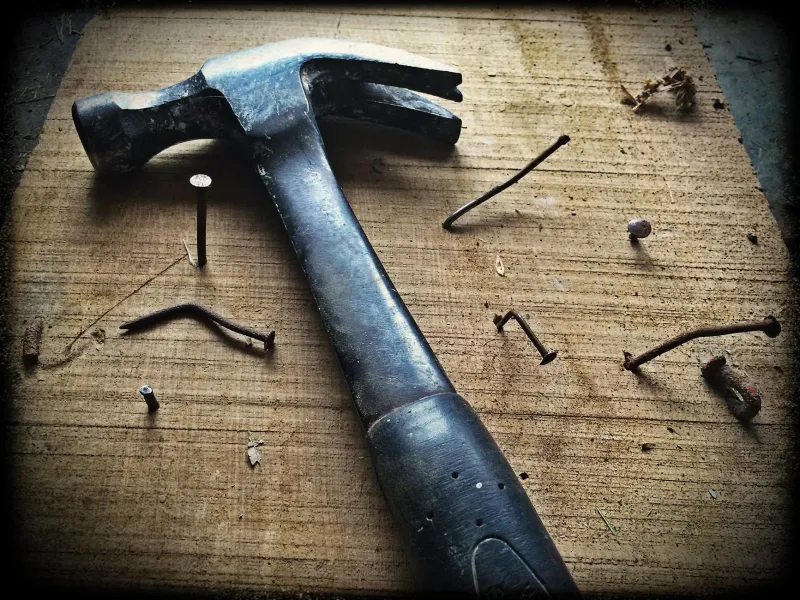
Hammers and mallets are another category where forging matters. The face geometry, balance, and grain structure of a hand-forged hammer head affects how it transmits energy to the work. A well-forged hammer can feel noticeably more efficient — less vibration, more energy to the nail or chisel — compared to a cast head of the same weight. This isn't placebo. It's physics.
Specialty ironworking and blacksmithing tools — hardies, swages, fullers, and forming tools — are almost exclusively hand-forged because the geometry and surface properties required simply can't be achieved any other way at reasonable cost. For anyone doing decorative ironwork, tool and die work, or custom fabrication, forged tooling isn't a luxury; it's the only option that works.
Where the Premium Gets Harder to Justify
Here's where the honest assessment gets uncomfortable for the hand-forged enthusiast community.
For many common trade applications, the performance difference between a quality production tool and a hand-forged equivalent is genuinely small. A production-made socket chisel from a reputable manufacturer — using quality steel, properly hardened and tempered — will perform admirably for most woodworking and construction tasks. The difference in edge retention or impact resistance might be measurable in a controlled test but practically invisible across a normal workday.
The premium also scales with the maker's reputation in ways that don't always track with metallurgical quality. Some of the most expensive hand-forged tools on the market are priced partly on aesthetic refinement — beautiful forge scale patterns, hand-rubbed finishes, custom handle work — that has nothing to do with cutting performance. You're paying for craft and identity as much as function.
For a tradesperson billing hours and running tools hard, the ROI calculation gets murky. A $40 production chisel that needs sharpening slightly more often might still be more economical than a $120 hand-forged version over a five-year horizon, depending on your sharpening setup and work volume.
The Serious DIYer Equation
The math looks different if you're a serious hobbyist or dedicated DIYer rather than a billing-hours professional. For this group, hand-forged tools often make genuine sense — not just emotionally, but practically.
When you're not racing a job clock, tool quality affects your enjoyment of the work as much as the output. A beautifully balanced, well-forged chisel makes hand-cutting joinery more satisfying. The longer edge retention means fewer interruptions to sharpen. The tool becomes something you develop a relationship with over years rather than a consumable you replace when it wears out.
There's also a durability argument that matters for infrequent but serious use. A well-made hand-forged tool stored properly can genuinely last generations — not as a collector's item, but as a working tool. That's a different kind of value calculation than cost-per-hour.
What to Look for If You're Buying
If you decide the premium makes sense for your situation, a few things separate legitimate quality from expensive aesthetics:
- Steel specification transparency — Reputable makers will tell you exactly what steel they're using (1084, 4140, O1, W2, etc.) and their heat treatment process. Vague references to "high-carbon steel" or "traditional iron" without specifics are a yellow flag.
- Warranty and repair policy — Makers who stand behind their work offer repair or replacement for manufacturing defects. A $200 hammer should come with a real warranty.
- Working tool design vs. display piece design — Some forged tools are clearly optimized for use; others prioritize visual drama. If the handle geometry is awkward or the weight distribution feels off in your hand, it's probably not a working tool first.
- Track record in the trade community — Look for reviews from people who actually use the tools professionally, not just from collectors or influencers.
The Verdict
Hand-forged tools aren't nostalgia in a box — there's real metallurgical substance behind the premium for the right applications. Striking tools, specialty ironworking equipment, and chisels used heavily in precision work genuinely benefit from quality forging and heat treatment. For general trade use with production tools from reputable makers, the performance gap is smaller.
Buy forged when the application demands it, when you'll use the tool enough to justify the investment, and when you're buying from a maker who can tell you exactly what's in the steel. At FerStore, we believe in tools that earn their place on the bench — whether they came off a production line or out of a one-man smithy.